
An allowance in construction is a placeholder amount in a bid or contract for something you haven't chosen yet, such as tile, light fixtures, cabinets or a faucet. The contractor prices the rest of the job in full and sets aside a dollar figure for that item. When you make your pick, the real cost is compared with the allowance: if it costs more, you pay the difference; if it costs less, you should get a credit.
Allowances let a contractor give you a price before every finish is decided, which is useful. They are also the easiest place for a bid to look cheaper than it really is. This guide explains how allowances work, the common types, how they differ from a contingency, and the questions to ask before you sign.
How an allowance works, step by step
Say a bathroom remodel bid includes a line like "Vanity and faucets: allowance $1,500". (That figure is only an example, not a typical price.) The contractor has priced everything around the vanity: demolition, plumbing connections, installation and cleanup. What they haven't priced is the specific vanity, because you haven't picked one.
Later you choose a vanity and faucets that cost $1,900. The difference of $400 is an overage, and it's added to your price, usually through a change order. If you choose a set that costs $1,200 instead, the $300 difference is an underage, and a fair contract credits it back to you. Either way, the allowance line gets settled, or reconciled, once the real number is known.
Common types of allowances
Material-only allowance. The allowance covers the cost of the item itself. Installation is priced separately in the bid. This is common for things like plumbing fixtures, light fixtures and appliances.
Material and installation allowance. The allowance covers the item and the labor to put it in. This is common for tile and flooring, where a pricier choice can also take longer to install. If a bid says "tile allowance $10 per square foot installed" (an example figure), a tile that needs a more complex pattern can push the labor up too.
Cash allowance. Some contracts use "cash allowance" for a fixed sum the contractor holds for a category, such as hardware or landscaping, to be spent as you direct. Ask what it includes and how unspent money is handled.
Unit-price allowance. Instead of a lump sum, the allowance is a rate, such as dollars per square foot of flooring or per light fixture. Your final cost depends on both the rate of what you pick and the actual quantity, so check the quantity the contractor assumed.
Allowance vs. contingency
People often mix these up. An allowance is for something you already know you need but haven't selected: you will definitely buy a vanity, you just don't know which one. A contingency is a reserve for things nobody can predict yet, like rotted subfloor or old wiring found once walls are opened.
An allowance sits inside the contractor's price. A contingency is often money you set aside in your own budget, not a line in the bid, though some contracts include one. Ask how any contingency is spent, who approves each use, and what happens to money that's left over. Plan for both: realistic allowances for finishes you haven't chosen, and a separate cushion of your own for surprises.
Why allowances can make a bid look cheaper
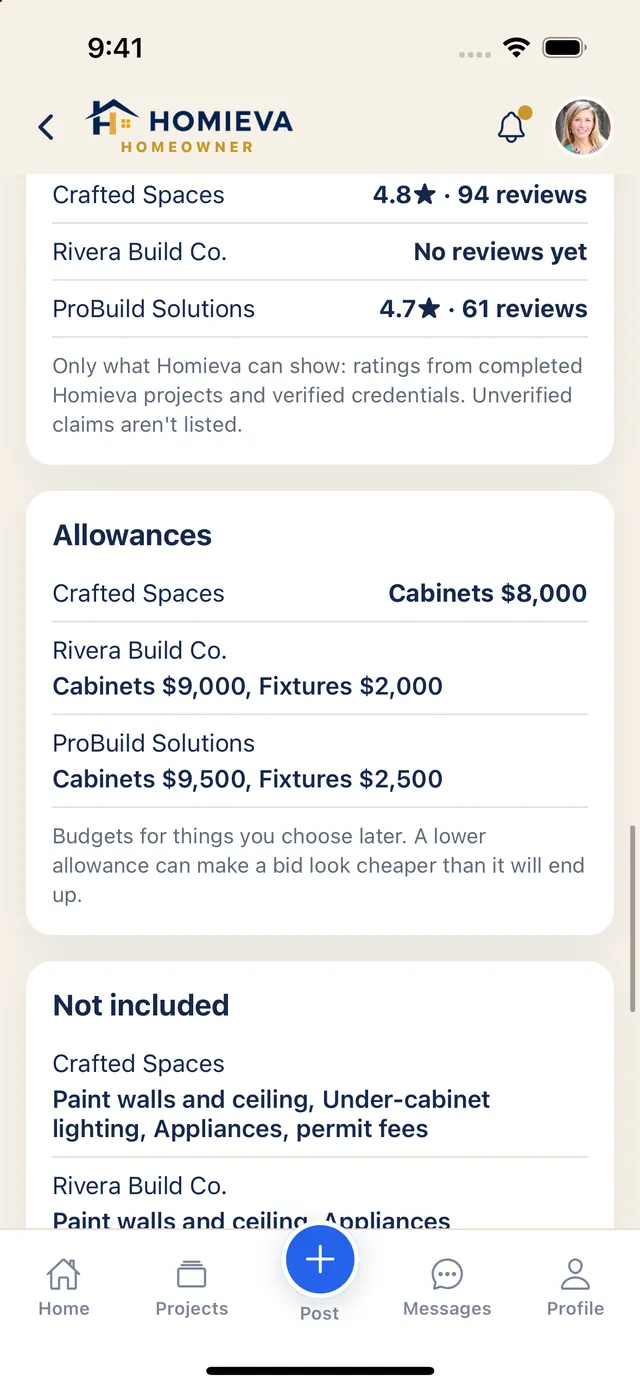
Imagine two kitchen bids. Bid A is lower, but its cabinet allowance is far below what the cabinets you've been looking at cost. Bid B is higher, but its cabinet allowance matches the cabinets you actually want. Once you pick your cabinets, Bid A's overage could erase the difference or more. Bid A wasn't cheaper; it just moved part of the cost to later.
That's why the fair way to compare is to adjust every bid to the same allowance amounts, or to pick your finishes before you sign so that allowances shrink to a few small items. Our guide on how to compare contractor bids walks through lining bids up line by line.
Questions to ask about every allowance
What exactly does this allowance buy? Ask for a sample product or a showroom or supplier so you can see what that amount gets you in the store.
Does it cover material only, or material and installation? This one question changes how far the money goes.
Is the allowance based on retail price or the contractor's cost? Contractors sometimes buy at a trade discount. Ask whose price is used when the overage or credit is worked out.
Is there a markup or fee on overages? Some contractors add overhead and profit to any amount over the allowance. That can be reasonable, since a pricier item may take more handling, but you should know the rule before you sign, not after.
Do I get a credit if I spend less? A contract should say plainly that unused allowance comes back to you.
What's the deadline for choosing? Allowance items often have lead times. If your choice is late, ask how that affects the schedule and whether there's a cost.
How will overages be approved and billed? The answer you want is a written change order, with the price, signed before the item is ordered.
Put allowances in the contract, and close them in writing
California's Contractors State License Board (CSLB) advises that a home improvement contract be as specific as possible about the materials to be used, down to brand, model, color or size where it matters, and that substituted materials or price changes be written on a change order. The CSLB notes that once a change order is signed, it becomes part of the written contract. Rules vary by state, so check with your own state's contractor licensing board.
In practice, that means listing every allowance in the contract with its amount, what it covers, and the selection deadline. When you pick the item, write down the brand and model and close the allowance with a change order showing the real cost and the overage or credit. Keep those change orders with your contract and receipts; they're the record of what you paid for and what was installed.
How to keep allowances from becoming surprises
Make as many choices as you can before you sign. Every finish you select up front is one less allowance to reconcile later.
Shop the allowance before you accept it. Spend an hour at a supplier or online pricing the kind of item you want. If the allowance only buys a basic option and you want something nicer, ask the contractor to raise it now, so the bid reflects your real budget.
Keep a running total. Each time an allowance is settled, note the overage or credit next to it. That way you know where your budget stands before the final invoice, not at it.
Before you hire, it also helps to ask each contractor how they handle allowances; it's one of the questions to ask a contractor before hiring.
See allowances side by side
Homieva puts allowances in plain view. Contractors bid on your project in one structured format that lists their allowances, exclusions, timeline, payment plan and warranty, and the bid comparison shows each contractor's allowances next to the others, so a low allowance can't hide inside a low price. Once you accept a bid, each change order, including an allowance overage, needs your signature before the work goes ahead. You can see how it works for homeowners or compare sample bids in the live demo.